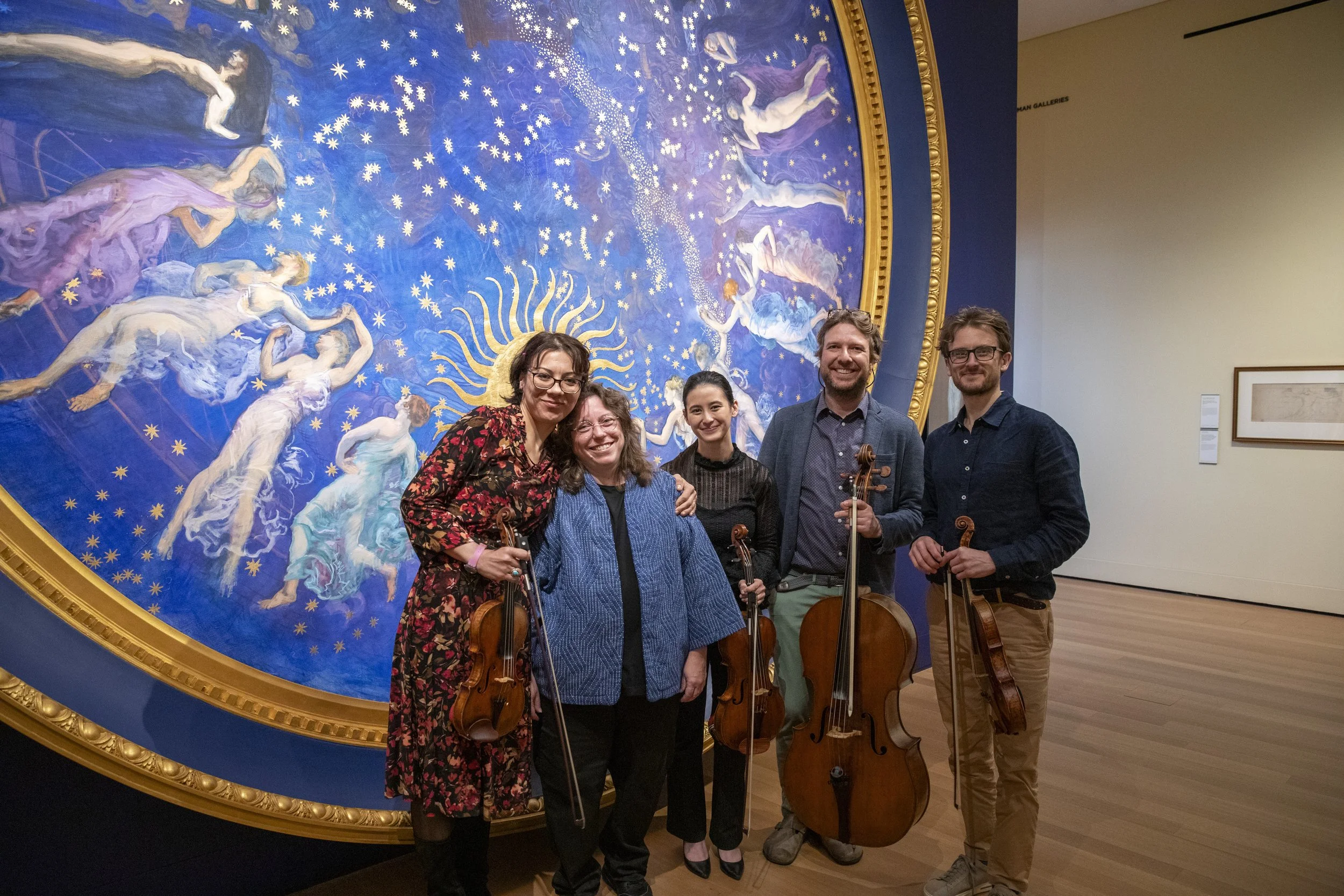
Playing Images: Reflections from a Member of the Haven String Quartet
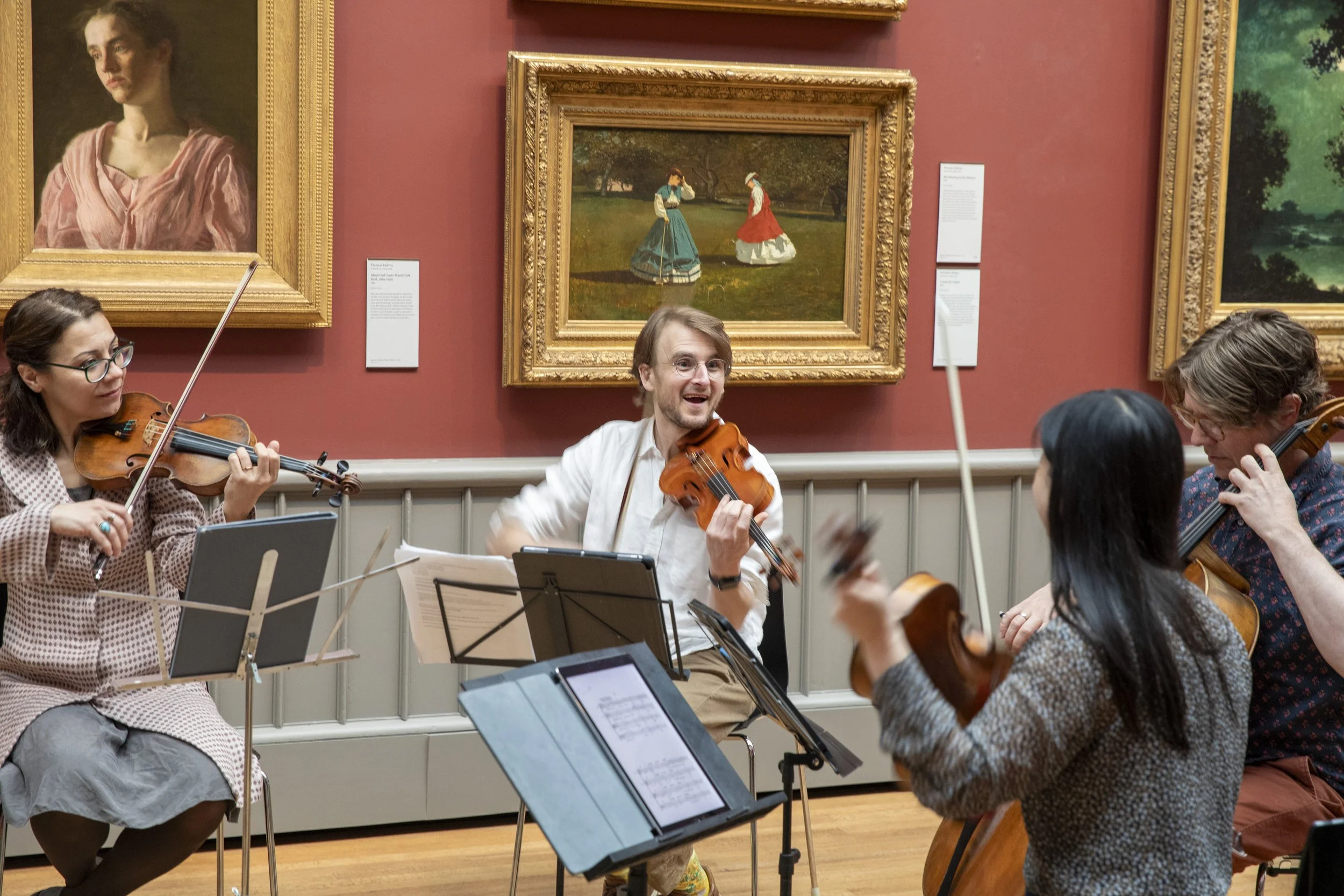
Since 2010, the Haven String Quartet and Jessica Sack have been collaborating on Playing Images. Each year, we present two programs at the Yale University Art Gallery, each one bringing together a piece of music and a work of art. For the past two seasons, I’ve had the pleasure of building those programs alongside Jessica, who serves as the Yale University Art Gallery’s Jan and Frederick Mayer Curator of Public Education. Tia Smith, a research assistant at the Gallery, helped dig into much of the historical material behind this year’s pairings. For each program, Jessica and I meet at the Gallery and wander through the collection together, looking for connections with string quartet literature. Sometimes the connection is something as concrete as a social tie between the artist and composer; other times it is a mood, or style, or some formal echo between the two — a shape, a motif, or a gesture that shows up in both the painting and the music.
Over the years that’s meant pairing the quartet with Impressionist painting and Debussy, with African art, with the music of Anton Webern, and a set of Japanese woodblock prints performed alongside Debussy’s String Quartet, built around his lifelong fascination with Hokusai.
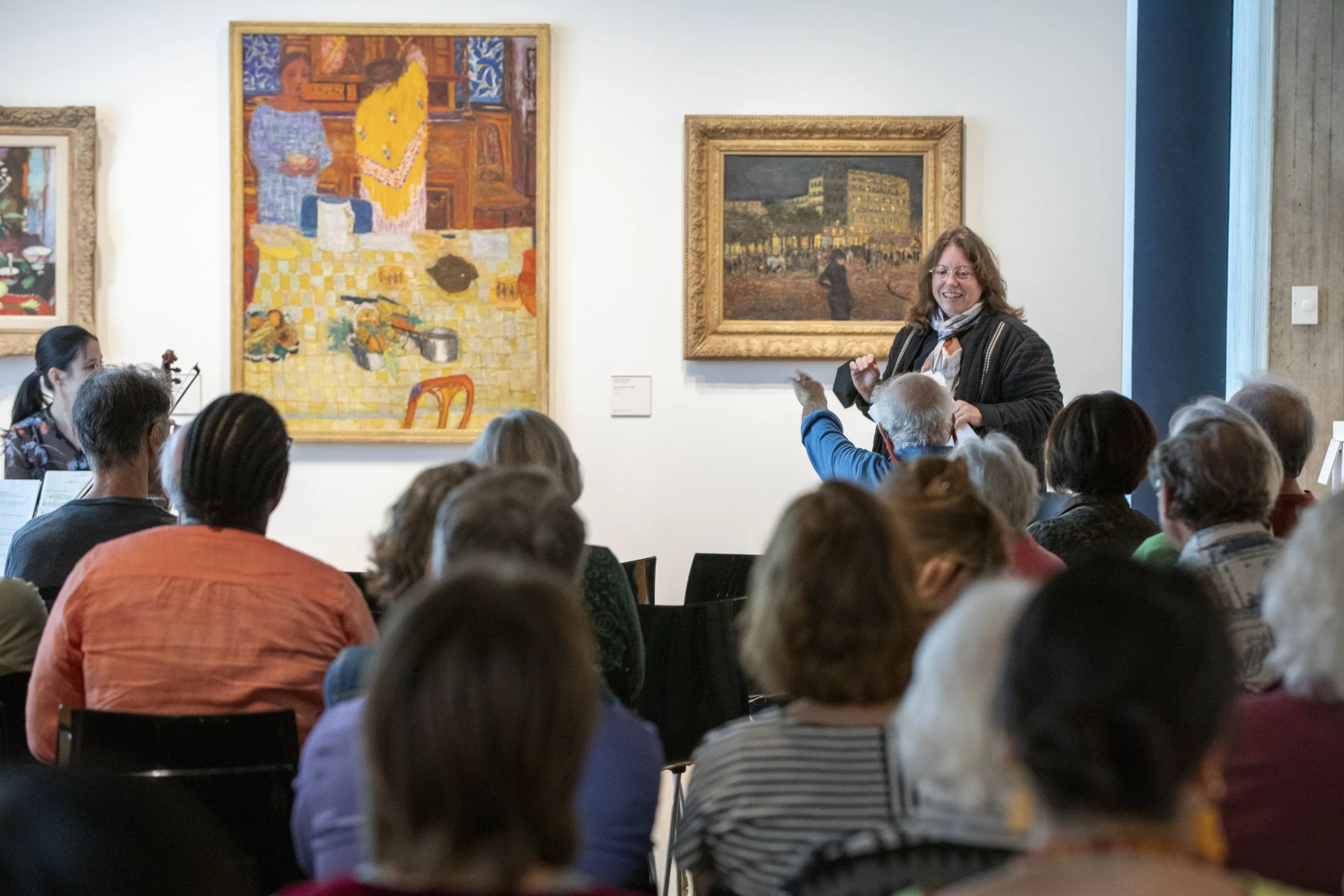
This year, we paired a movement of Ravel’s String Quartet with two Bonnard paintings from the Gallery’s collection: Place Pigalle at Night and The Yellow Shawl. As usual, as we studied the two artists and their work, the connections that emerged were exciting and delightful. Ravel spent much of his boyhood and adolescence in an apartment at 73 rue Pigalle, on a corner overlooking the very square Bonnard painted — by some accounts, the young Ravel used to watch the square’s street fairs from his balcony at night. Bonnard’s nocturne, with its faceless woman in black dissolving into the blurred, lamplit crowd, felt like an image from the composer’s own memory from childhood. The Yellow Shawl gave us the opposite mood entirely: two figures in a warm domestic interior, one in vivid yellow, one in calm blue, going about the quiet choreography of setting a table. Here, Bonnard plays with perspective, distorting the space of the room — foregrounding the textures and patterns of the tablecloth. Played with Ravel, the contrast between the two paintings — public nocturne and private interior, dissolving figures and intricate texture — gave the audience two very different perspectives to listen from.
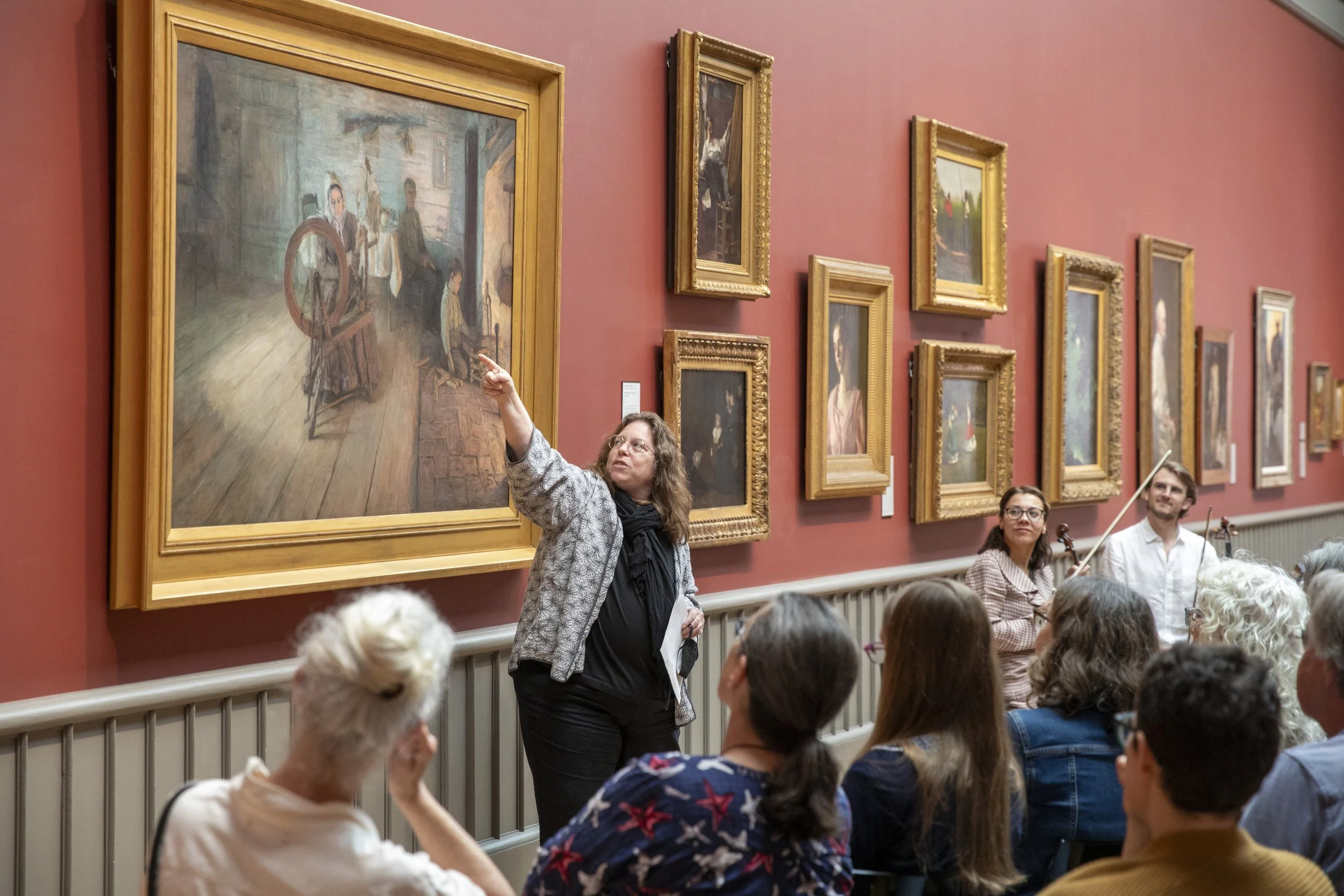
This spring, the pairing of the music and the painting provided rich possibilities for discussion. We paired the second movement of Florence Price’s String Quartet in G major with Henry Ossawa Tanner’s Spinning by Firelight (1894). Tanner — the first Black American artist to earn international acclaim — painted the work on commission from George Washington Gray, a minister and advocate for the education of African Americans and women. The scene shows a six-year-old Gray playing with corn cobs while his mother spins fiber and his father looks up from a book in his lap, a composition clearly inspired by both Eastman Johnson’s Boyhood of Lincoln — a portrait of the American President’s mythologized humble origins — and Tanner’s family life. Florence Price, born nearly three decades after Tanner, would go on to become the first Black woman recognized as a symphonic composer.
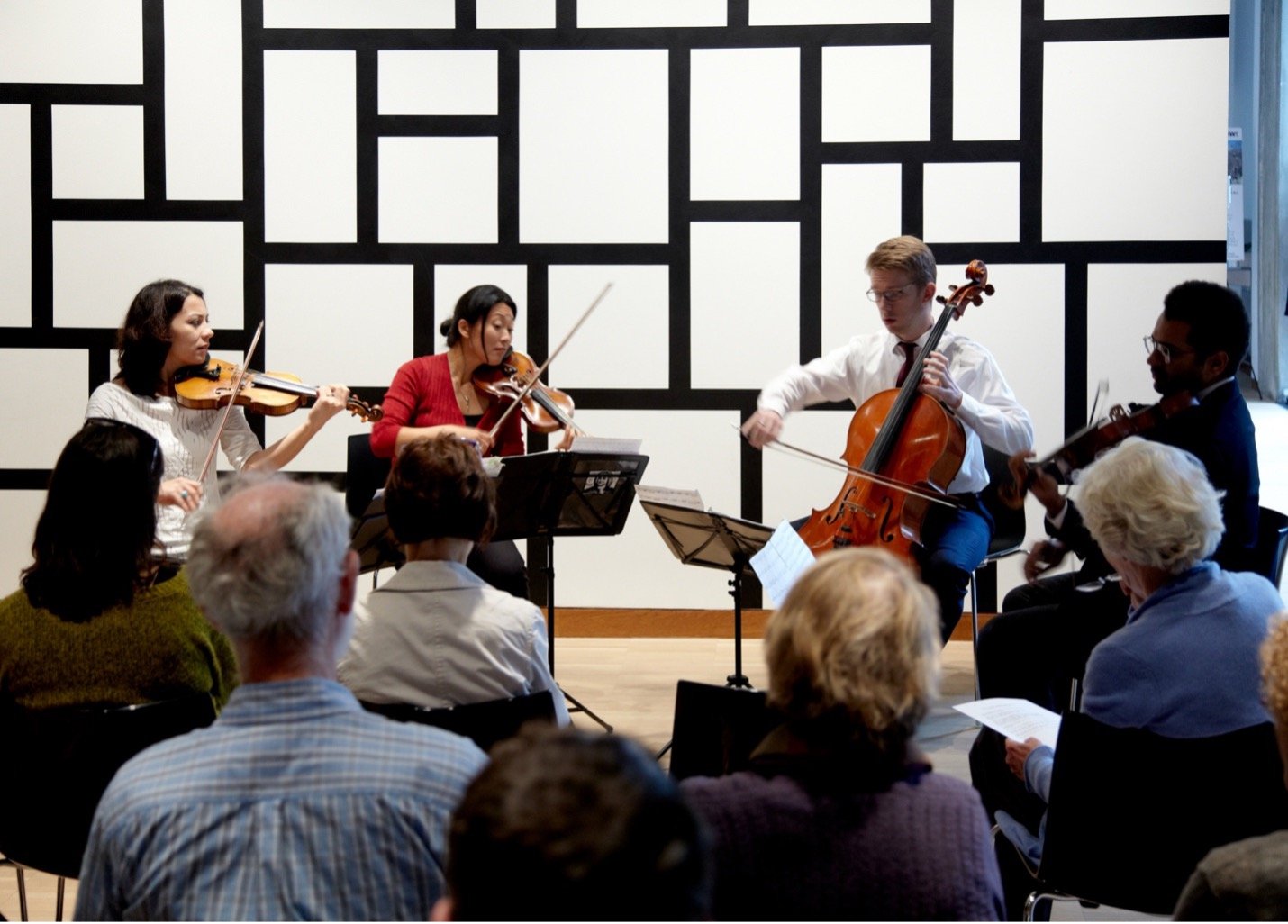
On the surface, the painting’s three figures paired naturally with the three contrasting musical themes in Price’s quartet. But the real treat came as audience members, together, built out a narrative — not just about the painting, but about George Washington Gray, the minister who commissioned it. A discussion arose amongst the group about whether commissioning a portrait of his humble childhood was something of a savvy political move on Gray’s part: a way to present himself as having risen from exactly the modest circumstances the painting depicts. The seventy chairs the gallery set out filled in as visitors homed in on the music wafting through the gallery. As usual, it was wonderful to hear each of the audience members’ different interpretations of the pairing — each person hearing the figures in the painting differently against Price’s themes. By the end, the audience, Jessica, and the HSQ had created a story from the sound and imagery that brought it all to life.
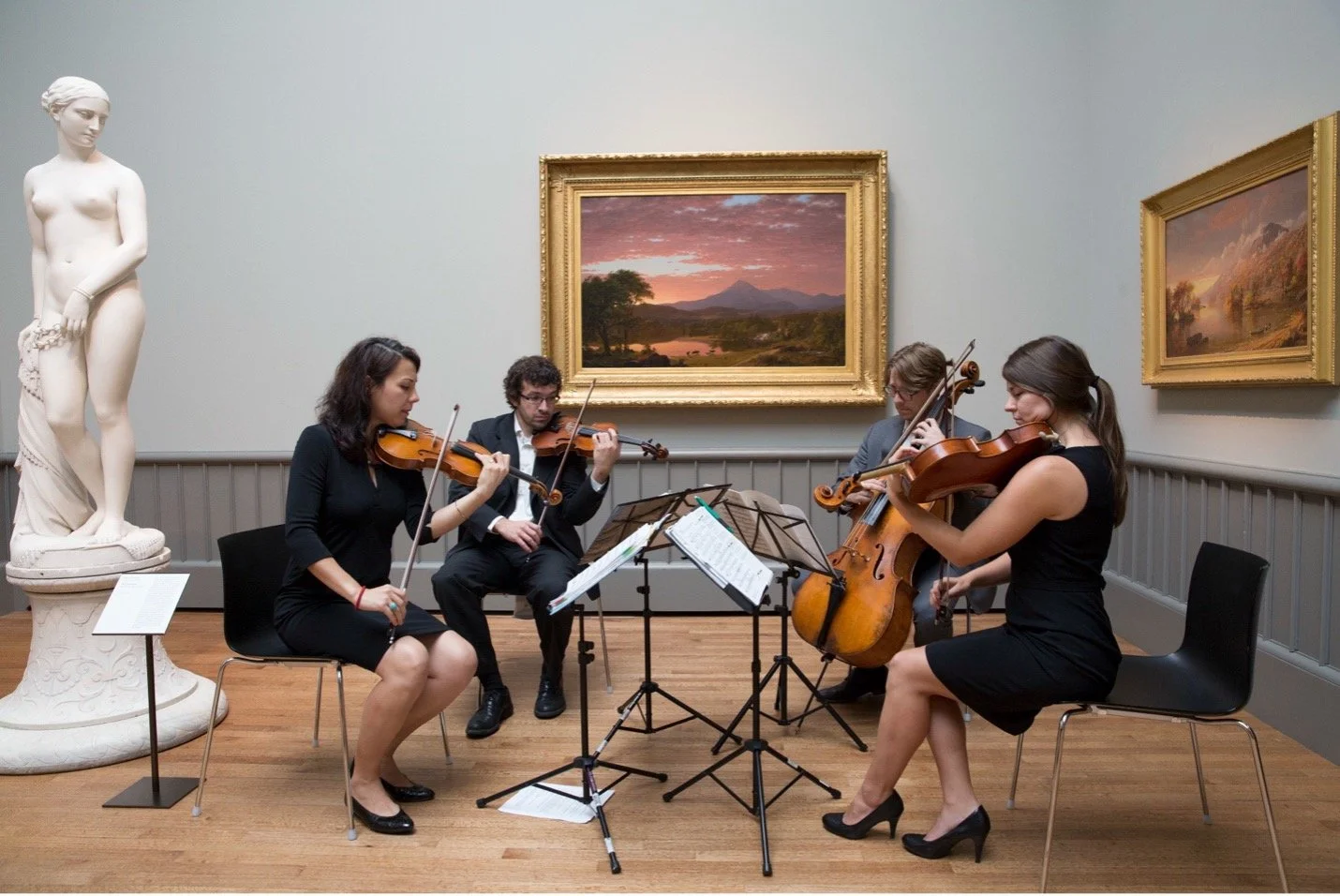
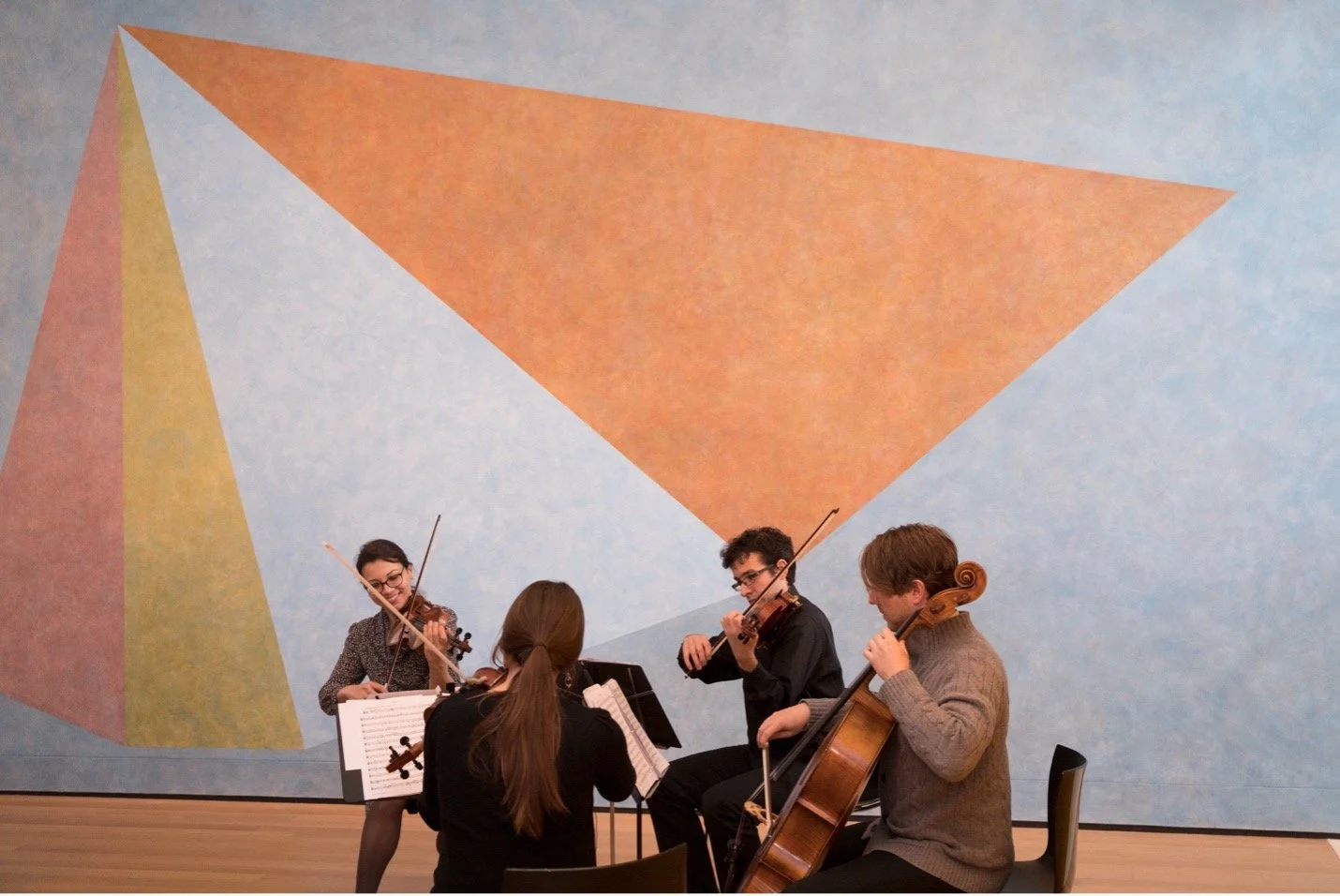
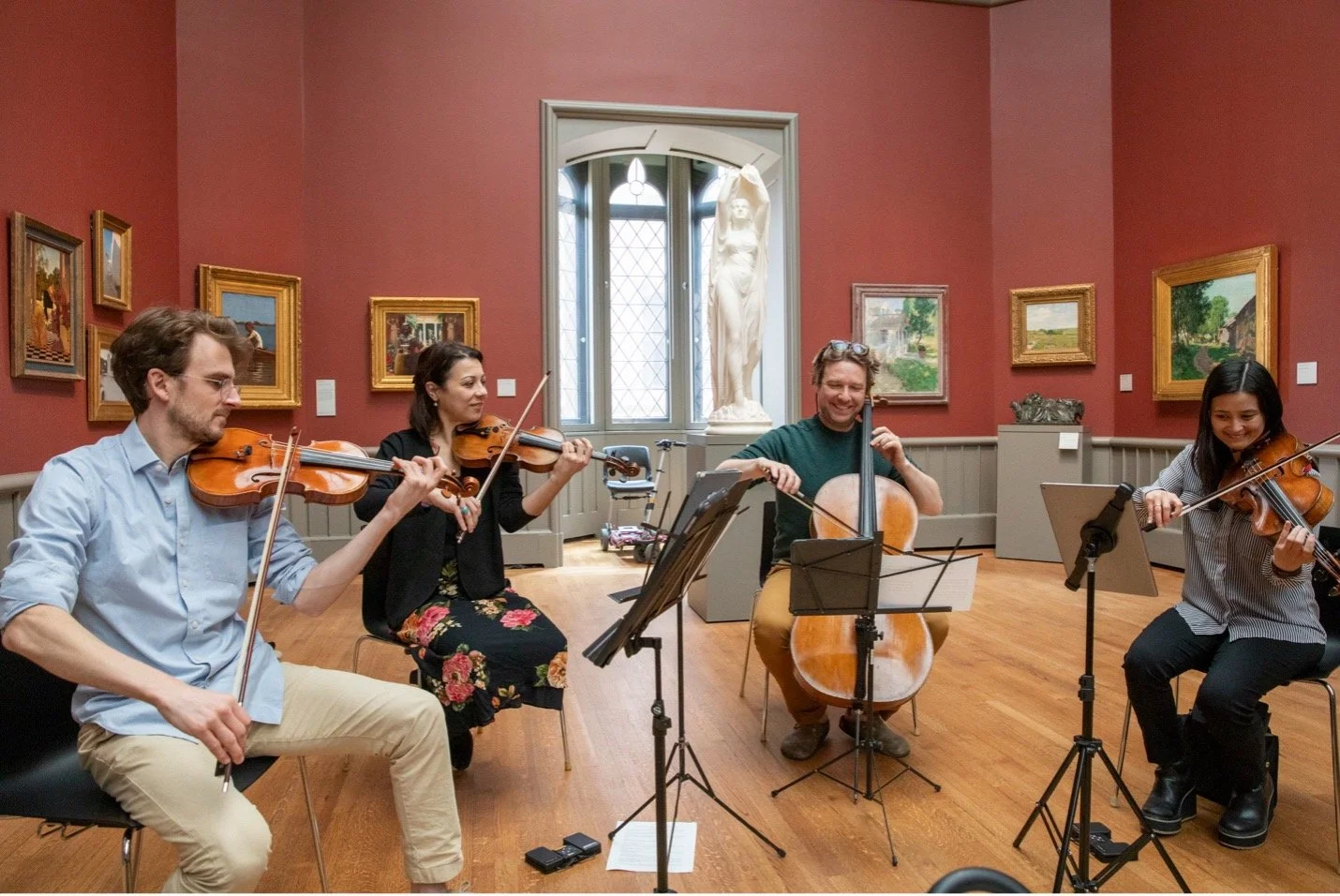
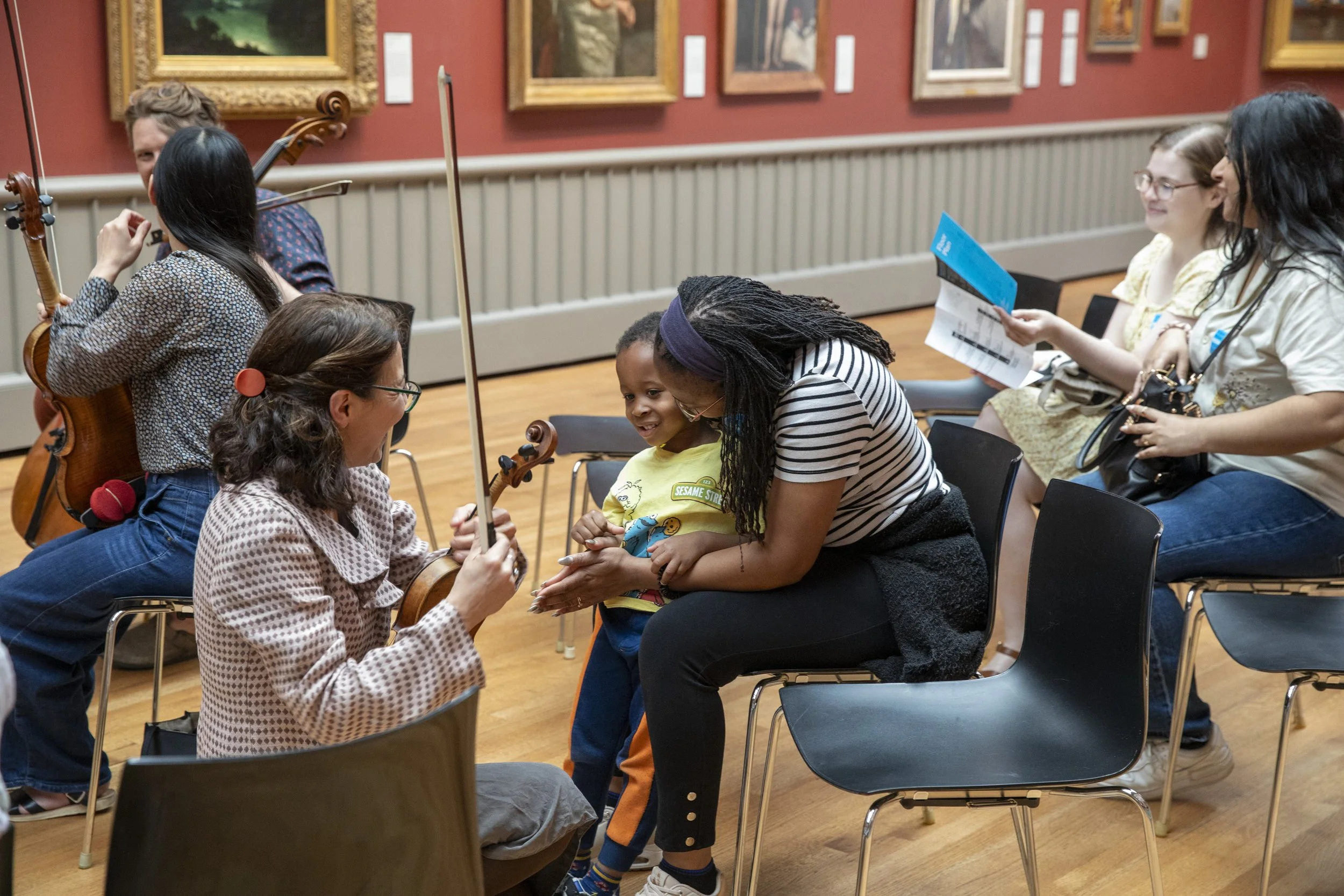
Jessica kindly sent us a gallery of pictures from performances going back to 2010.
-Post written by Dr. Patrick Doane, violinist in the Haven String Quartet and Music Haven Resident Musician